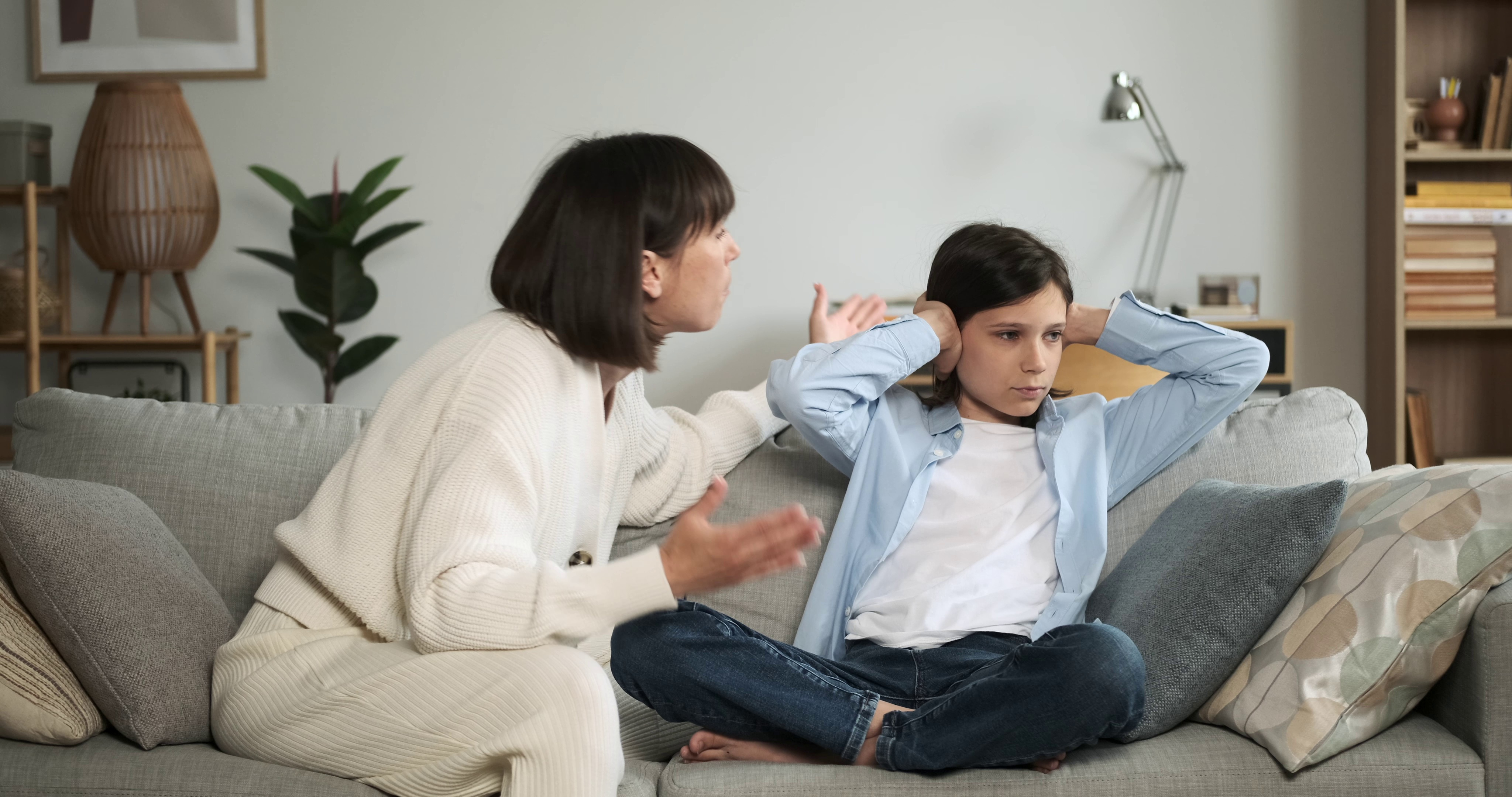
6 Mistakes Homeschool Parents Make
One of the most wonderful things about homeschooling is that there are so many different ways to do it. One of the most frustrating things about homeschooling is also that there are so many different ways to do it.
When you're just getting started, the options can feel endless. There are curriculum catalogs, educational philosophies, schedules, co-ops, book lists, YouTube channels, Facebook groups, and approximately eight thousand people who are absolutely convinced they know the right way to homeschool.
I've been homeschooling since 2012, and I've helped a lot of families get started over the years. I've also made plenty of mistakes myself, so this is not coming from a pedestal. It's coming from the place of, 'Please let me save you from learning every single thing the hard way if I can.'
The good news is that most of the early homeschool mistakes are fixable or even avoidable. They usually come from the same basic problem: we leave the school building, but we bring a lot of school assumptions with us. Homeschooling gives us tremendous freedom, but it can take a while to actually embrace and take advantage of that freedom.
1. Trying to recreate school at home
New homeschool parents often assume a legitimate education has to look like a classroom: fixed hours, desks, rigid subjects, constant written work, and a parent acting like a teacher at the front of the room.
I understand why that happens. Most of us grew up with a very specific picture of school. We know what it looked like, how long it lasted, what counted, and what made it feel official. So when we bring our children home, it is natural to start recreating the only model we have ever known.
But homeschooling is not school at home. It can be, I suppose, but I think that misses one of the greatest gifts homeschooling offers. A classroom has to be designed for a group. It has to manage time, movement, attention, pace, noise, assignments, and expectations for a lot of children at once. Your home does not have to do that.
You are allowed to build education around the actual child in front of you. You can adjust the pace. You can read on the couch. You can do math at the kitchen table. You can take a walk after a hard lesson. You can spend three weeks on something that fascinates your child and move quickly through something he already understands. None of that is cheating. That is part of the freedom.
2. Making the curriculum more important than the child
A plan is useful. A curriculum is useful. Neither one is sacred.
This is one of those things that sounds obvious until you are the one staring at an expensive curriculum you researched for months, wondering why your child cries every time you pull it off the shelf. It is very tempting to decide that because the book is good, the method is good, or the plan looked beautiful in July, everyone simply needs to push through.
Sometimes perseverance is exactly what is needed. I am not suggesting that every complaint means we throw the book away and start over. Children do need to learn how to do hard things. But there is a difference between helping a child build endurance and continuing to force a method, book, schedule, or expectation that is clearly not serving him or your family.
Changing course is not failure. It is responsible parenting. It is stewardship. The curriculum exists to serve the child, not the other way around. If something is not working, you are allowed to slow down, skip, repeat, combine, replace, or completely change direction. That is not you failing homeschool. That is you actually homeschooling.
3. Fighting your child's body instead of working with it
A lot of new homeschool parents waste an incredible amount of energy trying to make learning at home look like school.
They assume a child is only really learning if he is sitting upright in a chair, feet on the floor, pencil in hand, eyes forward, body still, and face arranged in the official expression of academic seriousness. Meanwhile, the actual child in front of them is bouncing, wiggling, doodling, lying on the floor, hanging upside down from the couch, or building something with his hands while he listens.
Again, I understand the instinct. We have all absorbed a certain picture of what learning is supposed to look like. The problem is that the picture is often more about classroom management than education.
In a classroom, a teacher may need twenty-five children sitting still at desks because anything else would be chaos. That makes sense in that setting. But at home, we do not have to manage twenty-five children. We are allowed to ask a better question than, 'Does this look like school?' We can ask, 'Is this child actually learning?'
My rule has always been pretty simple: if you're paying attention and you're not distracting anyone else, I don't really care what position you're in. Want to lie on the floor while I read aloud? Fine. Want to squeeze a fidget toy while doing math? Fine. Want to do school outside? Great. Want me to give you a shoulder rub while you work on a worksheet? Also fine, because apparently that is one of the services I offer now.
Of course, parents still need wisdom. Sometimes a child thinks he is paying attention when he absolutely is not, and that is where the parent veto comes in. But in general, I have found that children often learn better when they are comfortable. Some kids absorb information better when their hands are busy. Some think better when they can move. Some listen beautifully while doing something that looks, to a school-trained adult, like distraction.
This is one of the freedoms homeschooling gives us. We can stop fighting unnecessary battles over what learning is supposed to look like and start paying attention to whether learning is actually happening. If the child understands the lesson, narrates the story back to you, solves the problem, remembers the conversation, or applies the concept later, then learning happened whether he was sitting at a desk or upside down on the couch.
4. Trying to do every good thing at once
This was probably my biggest mistake when I first started homeschooling.
I read about classical education, and suddenly everywhere I turned people were talking about Latin, piano lessons, memory work, great books, beautiful notebooks, nature study, art appreciation, and a hundred other things that all sounded wonderful. I loved the idea of it. It sounded rich and beautiful and cultured, like something straight out of a Jane Austen novel if Jane Austen had also owned a laminator.
So I bought Latin books. I bought a keyboard. I made plans. Do you know how many of my children learned Latin? Zero. How many took piano lessons because of that keyboard? Also zero.
Not because I'm opposed to Latin or piano. I still think both are lovely. We simply didn't have time for everything. Every year those things slid to the bottom of the priority list, and eventually I had to admit they weren't actually happening in that season of our family.
This mistake often shows up with curriculum too. A catalog arrives in the mail. You find a great science program. Then a friend recommends a wonderful literature curriculum. Then you discover a history program you love. Before long, you have built a beautiful plan on paper, and every individual piece looks reasonable by itself. The problem is that nobody stopped to ask how many hours all of it actually requires when you put it together.
A wish list and a schedule are not the same thing. Many homeschool struggles are not caused by bad curriculum or defiant children. They are caused by trying to fit ten hours of school into a four-hour school day.
One of the hardest homeschool lessons is that there are far more good opportunities than you have time for. Your child cannot do every sport, read every great book, learn every language, master every instrument, join every group, and participate in every activity. Trying to do every good thing usually leads to doing very few things well, and it can leave everyone exhausted in the process.
That does not mean you cannot add beautiful extras. It means you need to choose intentionally. What matters most for this child, in this season, with the actual limits your family has right now? Choose those things first and let the rest go without guilt.
5. Measuring success by comparison
This one can sneak up on you because it often disguises itself as responsibility.
You compare your child to public-school grade levels, another homeschool family, a gifted child online, or an imaginary version of what your homeschool should look like. You worry about whether your child would pass a random pop quiz from a grandparent, a stranger at the grocery store, or someone at church who just heard you homeschool and suddenly wants to know whether your seven-year-old can name all the state capitals.
Please do not build your homeschool around imaginary pop quizzes.
I am not saying standards do not matter. They do. I am not saying academics do not matter. They do. But comparison is a terrible measuring stick because it usually measures the wrong things. It can make you chase appearances instead of wisdom. It can make you push a child in a direction that looks impressive while missing what he actually needs.
The real question is not whether your homeschool looks impressive from the outside. The real question is whether your child is growing, whether your relationships are healthy, and whether you are faithfully stewarding the children God gave you.
Your child is a whole person, not a list of facts or accomplishments. Pour yourself into the actual child in front of you. Teach him what he needs to know. Help him grow in wisdom and character. Pay attention to the fruit God is growing, not just the boxes someone else expects you to check.
6. Treating homeschooling as the goal instead of a tool
I love homeschooling. I have been doing it for a long time, I have helped other families get started, and I am deeply grateful for the freedom it has given our family.
But homeschooling is still a tool. It is not the point.
I do not believe homeschooling is automatically the most faithful choice for every child in every season. The goal is not to be able to say you homeschooled. The goal is to raise children well, follow God's leading, build strong and trusting relationships, and do what genuinely serves the family best.
This matters because even good tools can become idols if we start measuring our faithfulness by our loyalty to the tool instead of our obedience to God. The mistake is becoming loyal to the identity of homeschooling instead of staying loyal to the child, the family, and God's direction.
For our family, homeschooling has been a wonderful tool. For many families, it is a wonderful tool. But the goal is not homeschooling for its own sake. The goal is faithfully stewarding the children God entrusted to you and helping them grow into people who know Him, love truth, think clearly, take responsibility, and build strong families of their own someday.
So what do we do instead?
If I could tell new homeschool parents one thing, it would be this: do not let fear run your homeschool.
Do not let fear of falling behind make you recreate school at home. Do not let fear of wasting money make curriculum more important than your child. Do not let fear of looking too relaxed make you fight unnecessary battles over posture and movement. Do not let fear of missing out make you try to do every good thing at once. Do not let fear of judgment make comparison your measuring stick. And do not let fear of choosing wrong make homeschooling itself the goal.
You are not trying to build an impressive homeschool. You are trying to faithfully steward your children.
That will look different in different families and different seasons. Sometimes it will mean simplifying. Sometimes it will mean pushing through. Sometimes it will mean changing curriculum, loosening the schedule, tightening the schedule, dropping an activity, adding support, or admitting that something is not working anymore.
That is not failure. That is parenting.
The plan is supposed to serve your family, not the other way around.